Tuesday, August 7, 2012

Leviticus Worksheet ~ Leviticus Chapter 13

Observation Questions For

Leviticus Chapter 13

Review & Intro:  We have been looking at the laws for cleansing and purification in Levitcus, starting with chapter 11 regarding what animals could and could not be eaten, and then in chapter 12 the cleansing of motherhood afterbirth, and now in chapters 13 and 14, we will look at the laws for identifying the disease of leprosy and what the priest would do to declare a person cleansed of leprosy so that they could return to normal living among society. I got the following information from the rondavis.com website, ... Dr. William Thompson, who was a missionary over 100 years ago, wrote, "(Leprosy) comes on by degrees in different parts of the body: the hair falls from the head and eyebrows; the nails loosen, decay, and drop off; joint after joint of the fingers and toes shrink up and slowly fall away: the gums are absorbed, and the teeth disappear; the nose, the eyes, the tongue, and the palate are slowly consumed; and, finally, the wretched victim sinks into the earth and disappears." ..... The nerve endings would cease to function, so your body becomes dead to pain. You could pour boiling water on your feet and not know it. You could cut your hand open and not feel it. You were so completely desensitized, that you could do terrible damage to your body and not know or care. .... This gives us a picture of the horrible disease of leprosy, and through observation and Scripture comparison, we will see in these next chapters how it can compare to the spiritual disease of sin and our need to be declared "cleansed".  Amen.

four-lepers

Leviticus Chapter 13 - Law of Leprosy

1.  What signs on the body caused a person to know they needed to show themselves to Aaron or one of his sons the priests? vs. 1,2

2.  What 2 things would indicate to the priest that the person had an infection of leprosy and needed to be pronounced unclean? vs. 3

3.  If the bright spot was white on the skin and did not appear to go deeper than the skin and if the hair had not turned white, what would the priest do for 7 days? vs. 4

4.  On the 7th day, the priest would look at him.  If his eyes had not changed and the infection had not spread, what would the priest do at that time? vs. 5

5.  What would the priest look for in order to pronounce him "clean" on the second 7th day? vs. 6

6.  What would the person do with his clothes at that time? vs. 6

7.  What would the person need to do if the scab spread farther on the skin after he had shown himself to the priest? vs. 7

8.  What would the priest prounounce if the scab had spread on the skin? vs. 8

9.  What would indicate chronic leprosy to the priest and cause the person to be isolated from the people? - Name 3 symptoms - vs.9-11

10.  What did it mean if the leprosy covered the person from head to toe and had all turned white?  What would the priest pronounce then? vs. 12,13

11.  What did "raw" flesh indicate and bring about from the priest? vs. 15

12.  Once the "raw" flesh turns white, what does the priest pronounce him to be? vs. 16,17

13.  Concerning a boil.  Once it healed, there could be a white swelling or reddish-white, bright spot.  If so, it was to be shown to the priest.  What 2 things would the priest look for before pronouncing the person "unclean" or "infectious"? vs.18-20

14.  If these 2 things were not there at the time, what would the priest do for pre-cautionery measures? vs. 21

15.  If at that time, it had spread farther on the skin, what would the priest pronounce? vs. 22

16.  If the bright spot remains but does not spread; it is only the scar of the boil.  What did the priest pronounce? vs. 23

17.  When there was a burn on the skin and "raw" flesh of the burn became a bright spot ... reddish-white... or white (vs.24), then the priest would look at it.  What 2 things would cause him to know it was leprous? vs. 24,25

18.  If these 2 things were not present at the time, how long would the person be "isolated"? vs. 26

19.  What would indicate that it was leprosy and needed to be declared "unclean"? vs. 27

20.  If the bright spot remained, but had not spread and was dim, what was to be determined? vs. 28

21.  If a man or a woman had an infection on the head or on the beard, what were the 2 things that the priest would use to determine that it was leprosy? vs. 29,30

22.  If it was not deeper than the skin and there was no black hair in it, what would the priest do at that point? vs. 31

23.  If on the 7th day of isolation, the scale was not deeper than the skin or have yellowish hair growing in it, he was to shave himself, but not shave the scale.  How many more days would he be in isolation? vs. 32,33

24.  On the 7th day of the 2nd week of isolation, what 2 things would the priest look for in order to pronounce the person clean and to wash their clothes? vs. 34

25.  If the scale spread after the cleansing, what did it mean regardless of the hair inside it? vs. 35,36

26.  If the scale remained and black hair had grown in it, what would he be pronounced? vs. 37

27.  What would determine that bright spots were eczema and the person was clean and not infectious? vs. 38,39

28.  Concerning baldness.  Just to be bald was okay and the person was clean. (40,41).  What could break out on the bald head and need to be presented to the priest for inspection? vs.42

29.  What did the priest look for in order to call him unclean with leprosy? vs.43,44

30.  What was the leper with the infection suppose to do when he was pronounced unclean by the priest? vs. 45 - Name 4 things

Note:  During the unclean period of his infection, he was required to live alone outside the camp. (vs.46)

31.  Garment with a mark of leprosy.  What did the mark look like in order to be shown to the priest? vs.47-49

32.  What would the priest do when he was shown the garment? vs.50

33.  What would indicate 7 days later that it was indeed leprosy? vs.51

34.  If the garment had the mark of leprosy on it, what was done to it? vs. 52

35.  If the mark had not spread 7 days later, what would be done with the garment? vs.53,54

36.  After being washed, the priest would look at the garment again.  If the mark looked the same even thought it had not spread, it would be considered unclean.  What would be done to the garment? vs. 55

Final verses: If the mark had faded, the mark would be "torn" out of the garment.  If it appeared again in the garment, it was considered an outbreak and would have to be burnt (vs.56,57)...If the garment did not have any more marks, it would be washed a second time and then considered clean. (vs.38) ... This is the law of leprosy in a garment. (vs.39)

Be Clean1

Application:

37.  The term leprosy, as used in the Bible, actually refers to a whole variety of skin conditions ranging from rashes, to open sores, to various infectious diseases, and includes true leprosy as we know it today.  According to God’s Law given through Moses, a person with leprosy was ceremonially unclean and not allowed to take part in any form of worship. They were to live in isolation or cry out “Unclean! Unclean!” as they walked about the community. Lepers were strictly avoided since even accidental contact would cause a person to become unclean.  Yet, what did Jesus do when a leper came before Him?  Comment on the verse given. 

  • Matthew 8:1-4 -

38.  Why can leprosy be compare to sin?  What kind of offerings were to be offered when one had been cleansed (healed) from leprosy?

  • Read briefly through Leviticus 14 which we will study closer next.  What offerings did you find that must be offered that would indicate that leprosy was associated with sin in some way?

39.  Although the bible never says leprosy is a word-picture of sin, there are a few cases where someone in the bible got leprosy right after they committed some rebellious sin.  Comment on the following passages of why these got leprosy:

  • Numbers 12:1-15 -
  • 2 Chronicles 26:18-21 -

40.  Obviously there were people who got the disease who were no greater sinners than those around them, and I am sure it made a person feel unloved and uncared for by the God Whose very presence was seen by the cloud that hovered over the tent of meeting every day. ... Their only hope was that the Lord would have mercy upon them when they went for detection and would have to be isolated from those they loved.  ... I am sure they anticipated daily that they were being healed of the disease and hoping that the priest would come to find them healed and ready for cleansing and atonement of any sin so that they could get back into their reasons for living.  ... In comparing this disease with the spiritual disease of sin ...Has sin ever made you isolated from those you love?  Have you felt like an outcast and lonely because of the consequences of a sin that you were guilty of?  What did it make you feel like to be declared "clean" when you confessed and gave that burden of guilt to the Lord?  Share if you would like.

41.  Some ways that leprosy is like sin:  1)  Leprosy starts as a small spot and grows. Sin starts as a “little act”. All drunks start with one drink. .... 2) People with leprosy become numb in their feelings. People who sin more and more eventually become numb to its pain and its effects. ...it's called a "seared conscience"  3) Leprosy spreads on the flesh (skin). The word “flesh” is associated with our human sinful nature.the flesh and the spirit oppose one another as shown in Galations 5 ... 4) Leprosy grows and grows and eventually kills.... Read the following passage from the book of James and explain how sin progresses from a thought to an action to a death ...

  • James 1:15 -

42.  How do we self-test ourselves for the disease of sin?  When we find it, let's take it to our High Priest, Jesus.  He will have compassion, mercy, and sympathy for us.  Comment on the following verses:

  • First test - 2 Corinthians 13:5
  • Next, decide to come - Hebrews 4:16 -
  • Believe you are cleansed - 1 John 1:9 -

43.  Summarize this lesson and post a prayer if you would like.


Sunday, August 5, 2012

Leviticus Worksheet ~ Leviticus Chapter 12

Observation Questions For

Leviticus Chapter 12

Introduction:  Chapter 12 describes the uncleanness which a woman acquires as the result of the birth of a child. The uncleanness is the result of the “flow of blood” following the birth of a child. The blood, while it is unclean to her and others, is the instrument of her cleansing. In the text (Lev. 12:4-5) it is called “the blood of her purification.” It is impure partly because it removes the impurities of the child-bearing process from her body, thus making the blood unclean and defiling.

The explanation for why having a girl child results in a doubled period of uncleanness is a mystery to most scholars and commentators.  There is a thought I had that the male represents Jesus, who was also circumcised on the 8th day, and possibly the female represents the church which later is the bride of Christ collectively.  I wonder if the double days were to cover the time for the man and the woman collectively since the Bride and Jesus were to be one as a husband an wife are seen as one.  Just me thinking ?

lucille-bien-au-chaud

Leviticus Chapter 12

1.  What did the Lord tell Moses about a woman giving birth to a male child?  How long would she be unclean after his birth and what did the Lord compare it with? vs. 1,2

2.  What was to be done on the 8th day for every male child born? vs. 3

Love this scientific fact: Why was the circumcision to be performed on the eighth day? Newborn children have a lack of vitamin K during the first few days of life. Vitamin K is vital for its blood-clotting abilities, and is not present in the system until the 5th to 7th day of life. Prothrombin, another blood clotting agent, is at its highest levels in infants on precisely the eighth day of life. Babies have a "peculiar susceptibility to bleeding between the second and fifth days of life" (Holt Pediatrics) Man didn't know this until this century, but God told Moses this thousands of years ago!

 3.  When was circumcision first established with the sons of Israel?

  • Genesis 17:10-12 -

4.  How long was her blood purification period after that? vs. 4

Note: She was not to touch any consecrated thing or enter the sanctuary until the days of her purificaiton were complete. (vs.4) ...

5.  What did the Lord tell Moses about a woman giving birth to a female child?  How long would she be unclean after her birth and what did the Lord compare it with? vs. 5

6.  How long was her blood purification period after that? vs. 5

7.  When the days of her purification are complete for a son or for a daughter, what was the mother to bring to the priest at the doorway of the tent of meeting for a burnt offering?  vs. 6

8.  What was she to bring for a sin offering? vs. 6

9.  When the priest made atonement for her, what was she being cleansed from? vs. 7

10.  What provision was made if she was not able to afford to bring a lamb for the burnt offering? vs. 8

11.  Once the offerings were made and the priest made atonement for her, what was her condition? vs. 8

presentation of the lord

Application:

12.  Joseph and Mary followed the Jewish laws of purification and of circumcising Jesus on the 8th day of his birth.  Read the account below and comment on it.

  • Luke 2:21-24 -

13.  What did Joseph & Mary bring for their purification offerings for both the "sin" offering and the "burnt" offering? Based on what we have learned about the offerings in this chapter, what would that indicate their financial status would have been?

14.  We know that Jesus was not a sinner and that Mary & Joseph were simply being obedient in their Jewish faith to carry out all of the law regarding purification following birth of their newborn son, but every other child born since the fall of Adam and Eve are born into the condition of sin and require the Redeemer to buy them back.  When a person is old enough to understand and accept the Lord, once he hears the Gospel, he is cleansed from sin through accepting by faith the Lord's redemption for himself.  How does David say that he was born?

  • Psalm 51:5 -

15.  Each one of us can say the same thing as David acknowledged.  What does Paul remind us of in the following passage?

  • Romans 5:12 -

16.  Therefore, I believe the 2 offerings that the woman brought were meaningful in that one was a sin offering and she had brought a new "sinner" into the world.  This was acknowledging that she needed atonement for becoming unclean by the sin that had come from her into the world.  Yet, there was also a "burnt" offering to be given.  This was a consecrated offering of dedicating one wholly and completely to the Lord.  I believe this was how she offered the new baby up in thanksgiving and praise to the Lord for his/her life.  This may be why we have baby dedications to this very day.  What do you think?

Note:  I loved what Hannah said when she dedicated Samuel to the Lord and wrote the verse in both of my son's scrapbooks when they were born.  Look the verse up and enjoy as well:  1 Samuel 1:26-28

Comment on the verse (if you like):

16.  Summarize the chapter and post a prayer if you would like.


Friday, August 3, 2012

Leviticus Worksheet ~ Leviticus Chapter 11

Review & Intro:  When we come to Leviticus 11, we come to the third major section of Leviticus. In chapters 1-7, we had the offerings and the sacrifices that the Israelites could bring. Chapters 8-10 dealt with the priesthood—the actual ordination of Aaron and his sons which culminated in the death of two of Aaron’s oldest sons—and the instructions which come to Israel and to us from that. There were the offerings, the priesthood. Now chapters 11-15 deal with those things which are clean and unclean. Chapter 11 begins by talking about clean and unclean food.

fg diet-clean

Leviticus Chapter 11

1.  What is the Lord explaining to Moses and to Aaron about all the animals that are on earth? vs. 1,2

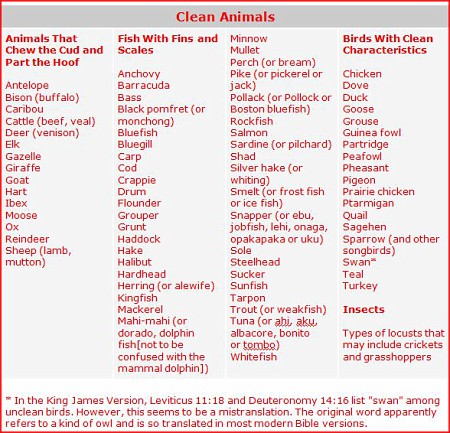
2.  First, God instructs about the land animals.  What 2 things must a land animal do in order for it to be clean for them to eat? vs. 3 - Name 2 requirements

3.  What if they had 1 of the requirements, but not the other?  For an example, could they eat a camel? ... a shaphan? ... a rabbit? ... a pig?   Why or why not? vs. 4-7

4.  What were the commands concerning these? vs. 8 - Name 2 things

5.  Next, God instructs about the water animals.  What were the 2 requirements that every water animal had to have in order to be clean to eat? vs. 9 - Name 2 things

6.  If they did not have these 2 things, they were to be detestable to them. (vs.10).  Can you think of popular seafood items that we eat that would have been considered unclean during that time? (share what comes to mind)

7.  What were the commands concerning these? vs. 11 - Name 2 things

8.  What was everything in the water that did not have fins and scales to be to them? vs. 12

9.  Next, God instructs about the flying animals.  What birds did He mention that were to be abhorrent to them and not eaten? - vs.13-19 - Name the 20 given

10. God even covers the law of the unclean and clean winged insects.  If they walk on all fours, what are they to be to them? vs. 20

11.  Yet, they could eat winged insects that had jointed legs that made them jump from the earth. (vs.21) .  What four are mentioned as clean to eat? vs. 22 - Name 4

12.  Other than those four, what were all other winged insects to be to them? vs. 23

13.  How long would a person be unclean if they touched their carcasses? vs. 24

14.  When a person picked up a dead insect of any kind, what did they need to do to their clothing and what would be their condition until evening? vs. 25

15.  Even though an animal divided the hoof, if their hoofs did not make a split or if they did not chew cud, they were unclean to them.  Whoever touched them would be unclean. (vs.26).  What was the command concerning animals with "paws"? vs. 27a

16.  What was the command concerning their carcasses? vs. 27,28

17.  Next, God told them about the swarming things on the earth.  What 8 things are mentioned and who would want to eat them anyway? (lol)- vs.29-31

18.  What condition would the person be who touched these when they were dead? vs. 31

19.  If anyone of these died and fell upon any wooden article, or clothing, or skin, or a sack -- or any article which use is made; what would need to be done for it to become clean again? vs. 32

20.  What would need to be done to any earthenware vessel that one of these would fall in if it were dead? vs. 33

21.  The food ... the water ... any liquid to be drank ... in every vessel ... would be unclean if the carcass had fallen in the vessel. (vs.34).  What would need to be done to an over or a stove if any part of the carcass fell upon it? vs. 35

22.  A spring or a cistern (well) collecting water would be clean though the one who touches their carcass would be unclean. (vs.36).  What about seed to be sown if any part of the carcass was to fall on the seed? vs. 37

23.  If, however, water is put on the seed and a part of their carcass falls upon it, what would it be considered to them? vs. 38

24.  If an animal had already died and someone had it for food, the one who touched the carcass of the animal would be unclean until evening (even the clean animals if they had died).. (vs.39) What was the person to do with their clothes and what would their condition be until evening? vs.40

25.  Another statement about "swarming things" on the earth.  They are all detestable and not to be eaten.(vs.41)  What were 3 descriptions given of the "swarming things"? vs. 42

26.  What was the command repeated from God again concerning "swarming things"? vs. 43

27.  In conclusion, the Lord is their God and He is holy.  Therefore, what are they to be? vs. 44

28.  The Lord brought them up from the land of Egypt to be their God.  Why should they be holy? vs.45

29.  The law regarding .. the animal and the bird.. and living things in the waters..and things that swarm on the earth... (vs.46) ... What was the purpose of this law? - Name 2 purposes given in verse 47


fg diet-unclean

Application:

30.  The charts in the lesson of animals that fit in the clean and unclean catagories are interesting to read.  Most of by common sense do not even desire to eat these animals.  Some, of course, are more common, such as catfish, shellfish, and definitely pork.  The dietary laws for Israel were not part of the New Testament church orders.  In fact, Jesus wanted the disciples to understand that it was not what entered into a man that "defiled" him, but it was the sin of the heart.  Read the following verse and comment:

  • Mark 7:18-19 -

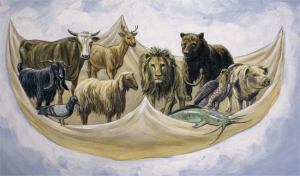
31.  The apostle Peter was a good Jewish man who also loved Jesus and was even told that upon his confession that Jesus was the Christ, the Lord would build His church!  He was not understanding that he was to welcome the Gentiles outside of the Jewish faith yet, and so the Lord helped him to understand with a dream.  He fell into a trance and had a vision.  Read the account below and explain what he saw in the vision and what the Lord wanted him to understand about clean and unclean animals, and most of all, how it applied to people He had created and wanted to reach with the Gospel.

peters-vision-of-sheet2

  • Read & Comment on - Acts 10:9-29 -

Note:  Most of us would agree that scientifically the shellfish, the catfish, and the pork is not so healthy anyway.  This was not to say he should eat these things and not to worry if they would keep him in good health or not.  The point was that avoiding the food was not what made him "clean" any longer for the Lord was now calling them clean.  Peter was cleansed because of his faith in Jesus and it is the blood of Jesus that now made him "clean".  He needed to understand that.

32.  Some Christians still follow the dietary guidelines in Leviticus and Deuteronomy, which is fine and most likely gives them better health.  It is not, however, a command we have to obey for cleansing now that we are under the New Covenant.  Only the blood of Jesus cleanses us and makes us whole.  The entire law was a shadow of all that was fulfilled in Him.  Let's look at some more verses and comment on them.

  • 1 Corinthians 8:8 -
  • Colossians 2:20-23 -
  • Read Romans Chapter 14 and comment on the verses that stand out to you concerning the subject at hand.


imagesCAGBX338

"Be ye Holy as I am Holy"

33.  Although it is not dietary laws or clothing laws that bring distinctions to us today, we are still to be holy (separate) from the ways of the world, not through religious ritual, but through moral conduct.  We should live our lives under the Holy Spirit's guidance which will bring about the fruit of His Spirit, being love, joy, peace, patience, kindness, goodness, faithfulness, and self-control, as given to us in Galatians 5:22,23.  Comment on the following verses:

  • 1 Peter 1:14-16 -
  • 2 Corinthians 6:17-18 -
  • 2 Corinthians 7:1 -

Note:  To be holy is to be separated unto the Lord; to be used for His purposes; therefore to cleanse yourself and your life from defilement of sin and the world. How can we manage to do this? .. with a list of do's and don'ts? No, that would be man-made laws at best and as we know from New Year's resolution year after year ... we don't keep that list very long but grow weary of the rules!  "It is not by might, not by power, but by His Spirit." (Zech. 4:6)

34.  What are we told in the Bible will keep us from a habitual life of sin and therefore blending into the world and its ways?  Comment on the following verses.

  • Psalm 119:11 -
  • Proverbs 8:13 -
  • Romans 12:1,2 -
  • Jude 20,21 -

Note:  If you fear (revere) God, you will keep away from evil, there by living a holy life. If you keep His Word foremost in your heart, it will keep you from sin.  Renew your mind and train it on the Word and then you will not conform to the ways of the world.  .... Don't concentrate on holiness per se. Concentrate on having a fear of the Lord, and holiness (sanctification) will be perfected in your life.  Remember what Jesus said, "It is not what we eat that defiles us, but it is what eats at us inside that defiles us" - What are we doing about jealousy, envy, anger, unforgiveness and those things that truly defile us and will make us sick?  Think about it.

35.  Summarize the lesson and post a prayer if you would like.
 

Thursday, August 2, 2012

Leviticus Worksheet ~ Leviticus Chapter 10

Observation Questions For

Leviticus Chapter 10

Review & Intro:  We just saw that the priests were consecrated for the work of the ministry in the past chapters.   Remember that there were five of them: Aaron the high priest, and his four sons: Nadab (Naw-DAWB), Abihu (Ah-bee-HOO), Ithamar (Eeth-aw-MAWR) and Eleazar (El-aw-ZAWR). But two of their ministries (and their lives) are going to end very shortly in this chapter's reading!

eishzarah lg

Leviticus Chapter 10

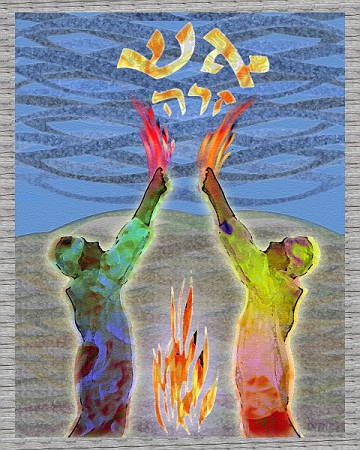
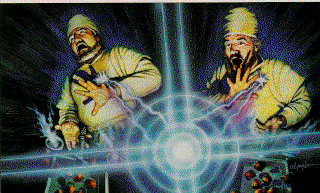
1.  What did Aaron's sons, Nadab and Abihu, do with their respective firepans before the Lord? vs. 1

2.  What happened as a result of their disrespect of their office and the Lord's command? vs. 2

Note:  They offered "strange fire".  The Hebrew word for strange is "zoor", and it means "foreign".  It came from a strange or foreign place.

etwog49

3.  They were not outside the tent of meeting, but obviously did not take care of the fire according to the directions God had given and they were not treating the Lord as Holy.  Why are we to honor God?

  • Revelation 4:11 -  

4.  What did Moses tell Aaron was the reason that the boys died that day? vs. 3a

5.  Could Aaron refute what Moses was telling him? vs. 3b

6.  This reminds us of a story in the New Testament.  Read about it and make the comments about how they are similiar.

  • Acts 5:1-11

7.  Each of the events were at the beginning of the covenants.  The Aaronic priesthood was the beginning of the Mosaic covenant of the Law.  The situation with Ananias & Sapphira were at the beginning of the New covenant of Grace (the Church age).  God wants to be feared (respected). Even the demons fear Him. (James 2:19)....

8.  As an example - What is the result of not respecting Him and taking the Lord's supper in an unworthy manner?

  • 1 Corinthians 11:25-32 -

9.  Do you think a holy reverence for God is missing in Christianity today?  What do you want to share about it?  (Please do).

10.  How is God to be honored and revered?

  • Psalm 89:6-8  -

11.  Back to Leviticus.  Moses called to the sons of Aaron's uncle Uzziel, Mishael & Elzaphan, to come forward and take their relatives away from the front of the sanctuary to the outside of the camp. (vs.4,5) ... What were Moses' strict warnings to Aaron and his other 2 sons, Eleazar & Ithamar? vs. 6,7 - Name 3 things they were not to do.

12.  What 2 things would happen if they did any of these things? vs. 6 - Name 2 things

13.  Who were the ones that could wail for the death of the 2 sons of Aaron? vs. 6

14.  Why were they not to even go out of the doorway of the tent of meeting? vs. 7

15.  Immediately, the Lord had a word for Aaron "directly".  What did He say to him in vs.8-11 in regard to drinking whether wine or other strong drink in the tent of meeting? vs. 9

16.  What was the abstinence of drinking to accomplish? vs. 10-11

Note:  This indicates the possibility that Nadab and Abihu had been drinking before they fell into their grevious sin as well. 

17.  What warnings are we given against drinking wine and strong drink in the Bible?  Comment on these verses:

  • Proverbs 20:1 -
  • Proverbs 23:29-35 -
  • Ephesians 5:18 -20 -

18.  Back to Leviticus.  What did Moses instruct Aaron and his surviving sons, Eleazar and Ithamar, to do concerning the grain offering that was left over from the Lord's offering by fire? vs. 12-13

19.  Who were to eat of the breast of the wave offering and the thigh of the offering in a clean place ... that came from the Peace Offerings of the sons of Israel? vs. 14

Note:  The thigh was "lifted up" and the breast was offered by "waving" and they were done in worship as the portions of fat burned before the Lord in the Peace Offerings. (vs.15)

20.  What was Moses searching for? vs. 16

21.  What had happened to it? vs. 16

Note:  Moses was angry with Eleazar and Ithamar because they had not done what was commanded with the goat of the sin offering.  It had been burned up rather than eaten by them in a holy place.  It was a ritual that the Lord honored to bear away the guilt of the congregation to make atonement for them.  It was the duty of their ministry! (vs.16-18)

22.  How did Aaron speak up concerning what had happened and why it had not gone just right? vs. 19

23.  How did Moses respond to Aaron's reason on this sad day of 2 of his sons dying? vs. 20

Note:  Another way of saying this might be ... Aaron saying, "Moses, please don't blame my sons. They've done what they were supposed to do. It's me who should've eaten the offering, but frankly, I've completely lost my appetite. I know that the sin offering is supposed to be eaten with rejoicing, but I just don't have any joy in me today after all that's happened. Would that have been good in the sight of God if I just went through the motions hypocritically?"... Moses was okay with that. He knew that the Lord prefers your honesty over your hypocrisy any day.  (Illusration borrowed from Ron Daniel at RonDaniel.com)

Application:

22.  As we read these stories and realize that every breath is a gift, we should be grateful.  If God treated us as our sins deserve, who among us would still be living? ..... In our gratitude, we should be eager to obey God.  Jesus said "If you love Me, you will obey My commands and ... His commands are not burdensome." (John 14:15;1 John 5:3).  What would you like to thank God for today and in what ways do you think you can personally show Him more respect and reverence from your walk and talk?

23.  Another thing we should think of is that the "little things" are important to God.  It was important they carry out the offering by fire exactly as He had told them.  When we don't, there are consequences.  Yes, there is forgiveness, but there is also reaping what we sow.  We can choose to sin, but we cannot choose our consequences.  Comment on these verses:

  • Galatians 6:7 -
  • Galatians 6:8 -

24.  Do we think God's instructions about purity, honesty, discipline, consistency, worship, prayer, money, etc. are "small matters" that do not require our attention and obedience?  We need to realize that blessings come with obedience and the heart is where all defilement is.  We can cleanse our vessels and be of use again.  Praise God for His grace. \o/

  • 2 Timothy 2:20-22 -

25.  Summarize this lesson and post a prayer if you would like.


Leviticus Worksheet ~ Leviticus Chapter 9

Review & Intro:  We looked at the ordination of Aaron and his sons in Chapter 8.  We saw at the end of the chapter that they were to stay inside the tent of meeting for 7 days keeping the charge of the Lord.  In application, we said that this would prepare them to minister to the people to first minister to the Lord. 

It is now the 8th day; the day to begin to minister, and yet it begins with more sacrifices to cover their sins.  Wow - it seems like they would be able to sin being shut off from the world and in fulltime service to the Lord, but it is not possible to be without sin.  We are told in 1 John 1:8 that if we think we can be without sin, we are deceiving ourselves and the truth is not in us.  The answer is always to confess our sins and know that the Lord will cleanse us from all unrighteousness through confession (1 John 1:9)  How did they do that before the cross of Jesus?  With more sacrifices.  The blood has to continue to flow and cleanse them. 

Praise the Lord, Jesus died once for all and does not have to be offered again and again. (Hebrews 7:27).  The grain offering they will offer will acknowledge God as the provider of all things; they have gone into fulltime ministry and fully dedicating themselves to the Lord and His watchcare over them.

My God is my Sacrifice

Leviticus Chapter 9

1.  The chapter begins on the 8th day, which was the day after the 7 days of Aaron and his sons being in the tent of meeting for their ordination. (vs.1) ... Who did Moses call upon to instruct? vs. 1 - Name 3 groups

2.  What did Moses instruct Aaron to take for "himself" for a sin offering? vs. 2 ...  What was different about this than what was usually given for the sin offering?  What do you think that might mean in Aaron's case?  (think about it) ....

3.  What was Aaron to take for "himself" for a burnt offering? vs. 2

4.  Both the calf and the ram were to be without defect. (vs.2) ...Aaron was to offer these before the Lord.  Then Moses was to speak  to the "sons of Israel".  What animal were they to take for their sin offering? 3a

5.  What 2 animals were they to take for the burnt offering and what age and condition were they to be in? vs. 3b

6.  What 2 animals were to be taken for a peace offering? vs. 4a

7.  The people were also to bring a grain offering mixed with oil. ... What was the special occasion they were preparing for with all of these offerings? vs. 4b

8.  They took what Moses had commanded them to the front of the tent of meeing, and the whole congregation came near and stood before the Lord. (vs.5)...What did Moses plainly tell them at that time? vs. 6

Note:  Can you imagine how they must have felt to hear this?  It was a terrifying experience for them when they were at the bottom of the mountain when Moses was hearing from God and they were able to see and experience the presence of God ... they had seen the cloud as the Glory of the Lord filled the tabernacle when it was finished.  They knew that the priests were going to atone for their sins so that they could experience the glory of God and the favor of God.  So, this very day, the glory of the Lord will appear to them!  What do you think you would be feeling knowing that? 

9.  What did Aaron have to do for himself before he could make atonement for the people? vs. 7

10.  Aaron presented offerings for himself from vs.8-14. .... Then Aaron presented the people's offerings from vs.15-20.  Notice the order.  Sin Offering / then Burnt Offering / and then .. Peace Offering.  Thinking through all we have learned about each of these offerings, how do you see this being the case for our fellowship with the Lord as well?  Pray and ask the Lord to give you some thoughts on this you can share with us (if you would like).

11.  What did Aaron do with the breasts and the right thigh of the offering? vs. 21

12.  After this, Aaron lifted up his hands toward the people and he blessed them!  After this, he stepped down from making the sin offering; the burnt offering; and the peace offering. (vs.22)

13.  We are told that the tribe of Levi were given the charge of the Lord to bless the people in Deuteronomy 10:8. ... We are given the blessing that the Lord told Aaron to bless the people with!  Let's look at it.  Comment on the verse below:

  • Numbers 6:22-27 -

14.  Back to Leviticus 9.  Moses and Aaron went into the tent of meeting.  When they came out, they blessed the people, and the glory of the Lord appeared! (vs.23)  ... How did the glory of the Lord manifest to them? vs. 24

15.  How did the people react to the glory of the Lord that day?  vs. 24


god accepts

Application:

16. I asked that you think about the animal that was different from what we had seen previously with the sin offering for Aaron and the burnt offeirng for the people ... it was a "calf"; not just a bull; but specifically a "calf".  Remember that the people asked Aaron for a "calf" to worship and he provided it as they gave him their gold and he formed the "calf" for them to worship while Moses was on the mountain for the first round of 40 days and 40 nights.  God's grace had allowed Moses to go up the mountain a second time and receive the stoned tablets again after Moses in anger had thrown and shattered the first set when he saw the "calf" being worshipped in the camp with Aaron leading the people. ... Could this be God's way of reminding them how weak their flesh would be in obeying His commandments? 

We all need to realize our vulnerability as humans and our inability to serve the Lord in the holiness He absolutely demands from us.  For them, the constant offerings was a constant reminder.  For us, we must look back on the cross and see the death of our Savior and think about the fact that He became the offerings for us.  When we are weak and weary, we look upon the forgiveness (as they did by sin offering), and then we consecrate ourselves again wholly as Romans 12:1,2 teaches us (as they did by burnt offering), and the beautiful thing is that we experience His peace when we are reconciled to God and after confession when we are made right with God again (as they did by peace offering).  Even with the wave offering, I can see that we uplift our hands in glorious praise to our Lord for all that He has done for us.  Amen !! 

I would love for you to respond back with verses you find on weakness, confession, and all the things that the Lord is there for us to help us through the Holy Spirit.  I think it would be good to see what all you bring as you ask the Holy Spirit to help you. 

17.  As for the glory of the Lord, we have looked at the verses in our study that showed us that Jesus is the glory of God.  There is a sense of praying for His glory to manifest at times when we are praying, especially in a congregation.  Why do we want a manifestation of His glory?  What do you think that would mean to you?  Would it make a difference if you saw a manifestation?  Why or why not?  (Hope some will respond to this)

18.  Summarize the lesson and post a prayer if you would like.